
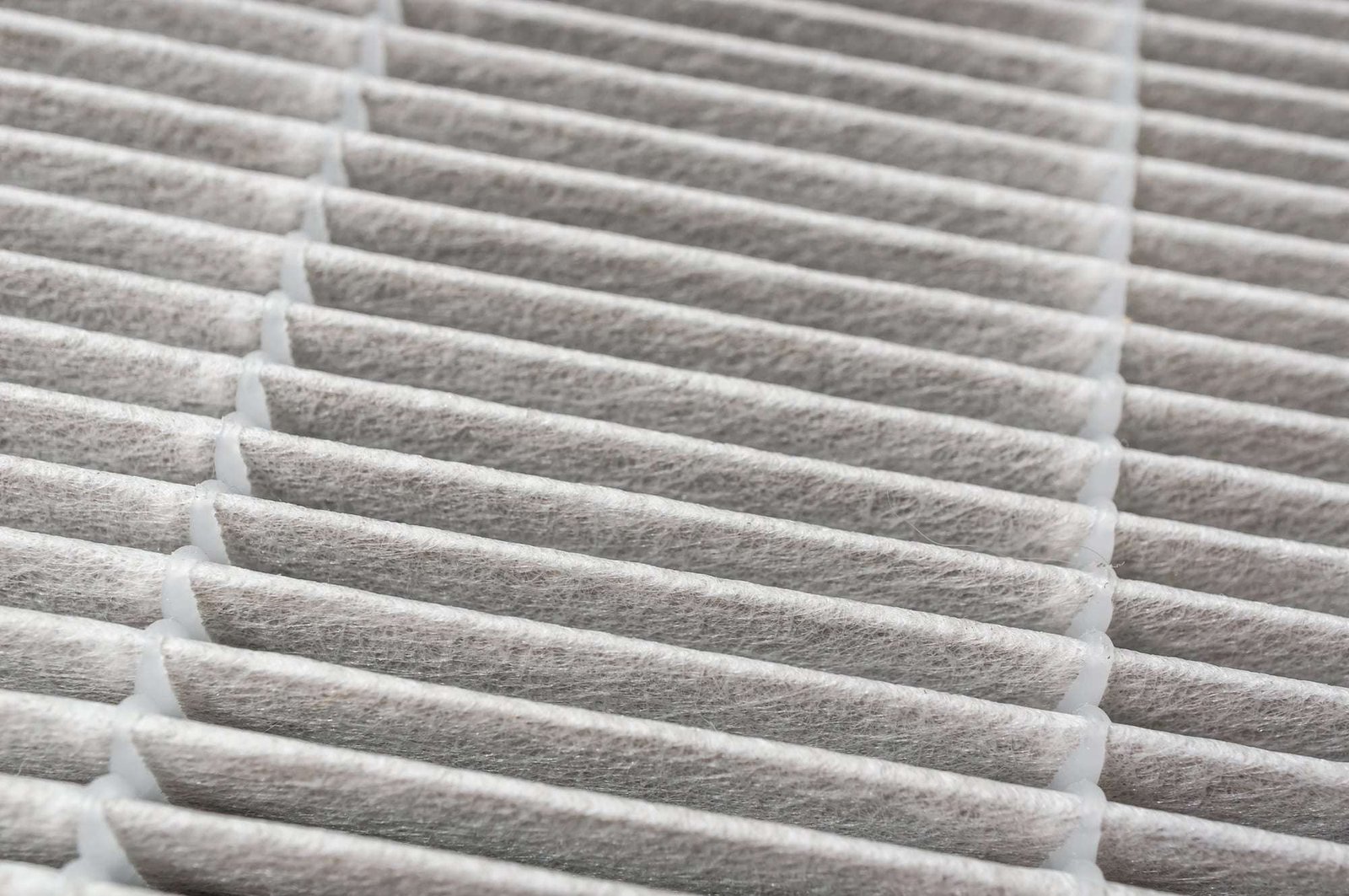
When homeowners look for solutions to improve air quality, HEPA filters are one of the most popular options. These filters, widely used in air purifiers, HVAC systems, and vacuums, are praised for trapping small particles like dust, pet dander, and pollen.
However, HEPA filters fall short when it comes to eliminating persistent household odors. While they can capture a wide range of particulates, they aren’t designed to neutralize or remove the underlying causes of odors.
What Are HEPA Filters?
HEPA, which stands for High-Efficiency Particulate Air, refers to a specific type of filter that meets strict standards for air filtration. To qualify as a true HEPA filter, it must remove at least 99.97% of airborne particles as small as 0.3 microns. This makes HEPA filters incredibly effective for trapping allergens, dust, mold spores, and other microscopic particulates from the air.
These filters force air through a fine mesh that captures airborne contaminants. HEPA filters are commonly found in air purifiers and are often used in homes, hospitals, and industrial settings where clean air is a priority. However, while HEPA filters are very efficient at removing solid particles, they do not neutralize odors caused by gaseous molecules much smaller than 0.3 microns.
How Do Odors Work?
To understand why HEPA filters cannot thoroughly deodorize a home, it’s essential first to understand the nature of odors. Odors are caused by volatile organic compounds (VOCs) and other gaseous molecules released into the air from various sources, including cooking, pets, cigarette smoke, and mold. Unlike the larger particles that HEPA filters are designed to trap, these odor-causing molecules are minuscule and can easily pass through the filter’s mesh.
For example, while a HEPA filter can capture pet dander, it cannot capture the microscopic gases responsible for the “wet dog” smell that might linger in your home. Similarly, cigarette smoke leaves behind VOCs that a HEPA filter alone can’t eliminate. These odor-causing molecules disperse throughout the air and cling to surfaces like carpets, upholstery, and walls, further complicating the deodorization process. Therefore, while HEPA filters can remove some of the particulates associated with odor, they cannot address the root cause of the smell itself.
The Role of Photocatalytic Oxidation in Odor Removal
For homeowners seeking a more comprehensive and permanent solution to odor removal, photocatalytic oxidation is the key. Biosweep of Central Florida uses this advanced technology to completely neutralize odors at their source, going far beyond what a HEPA filter can achieve. But how does it work?
Photocatalytic oxidation (PCO) uses a combination of light energy and a specialized catalyst to produce reactive molecules, such as hydroxyl radicals. These radicals interact with and break down odor-causing compounds, including VOCs, on a molecular level. This process effectively dismantles the chemical structure of these compounds, rendering them harmless and eliminating the odor entirely.
Unlike HEPA filters, which simply trap particles, photocatalytic oxidation chemically transforms the molecules responsible for bad smells into harmless byproducts, such as carbon dioxide and water. This process works not only on the air itself but also on the surfaces where odors can cling, providing a more thorough and long-lasting solution.
Call Biosweep of Central Florida Today if Your HEPA Filters Don’t Cut It!
While HEPA filters are an important tool for improving indoor air quality, they are not the answer to eliminating persistent household odors. The science behind HEPA filtration shows that while these filters can trap particles, they are ineffective at neutralizing the gaseous molecules responsible for bad smells. For complete deodorization, a more advanced solution is required.
Biosweep of Central Florida’s photocatalytic oxidation technology offers a superior approach to odor removal. By attacking odors at the molecular level, this process ensures that smells are eliminated for good, leaving your home fresh and odor-free. If you’re struggling with lingering odors in your home, contact Biosweep of Central Florida today to learn how photocatalytic oxidation can provide the permanent solution you need.
Read More


